
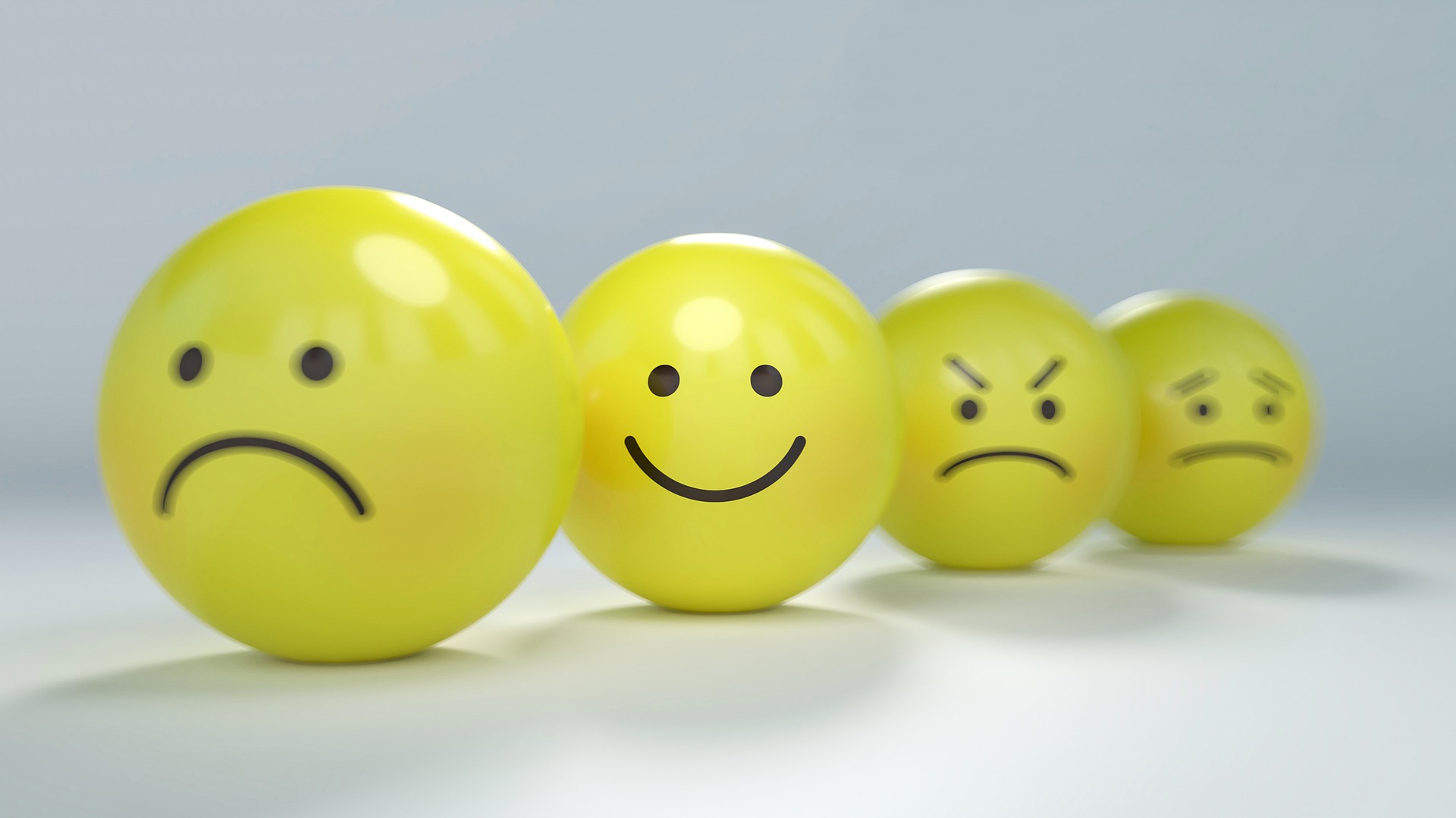
First steps to understanding your emotions — Part 1
What am I feeling? What do these feelings mean?
Are emotions and feelings the same?

There are many words to describe how we feel, but feelings are not the same as emotions. Feelings can be understood as emotions combined with our thoughts, or cognitions.
Emotions are core responses of the nervous system and limbic system that we feel physically. As we become more attuned to our body, we can become more connected to our emotions. This connection helps us to heal and live life more fully.
Understanding the intensity of our emotions
Identifying an emotion is a starting point. The words we use to describe it also give us clues about its intensity and quality.
The SUDS scale, or Subjective Units of Disturbance Scale, helps us measure emotional intensity and describe the distress or disturbance we are experiencing. It gives us a way to express, from our own experience, how strong those feelings are.
The scale runs from 0 to 10. At 0, we feel calm and peaceful while remaining fully aware. At 10, we are experiencing the greatest emotional intensity and disturbance.
What are the basic emotions?
There are many theories and observations about basic emotions. In the next article, I share my thoughts on this subject as a clinician.
Gradients of emotions
We do not experience emotions only one at a time. Our emotional states can be colourful and complex, with different emotions appearing in different intensities and combinations.
In a study involving 853 participants, including men and women, researchers Alan Cowen and Dacher Keltner identified 27 categories of emotional experience in responses to more than 2,000 video clips. Their findings describe gradients between emotional experiences rather than completely separate categories.
In other words, our emotions are not always isolated from one another. They can blend together as part of what we are feeling.
Learning to understand and regulate our emotions
Learning self-realization skills and practices can greatly support our mental and emotional health.
Emotions are powerful! They are part of our vital force and our soul. When our emotions are in disarray, we can experience difficulties such as depression, anxiety, PTSD, OCD and problems managing anger.
Therapy can help us to understand ourselves and develop emotional self-regulation. You can learn more about EMDR therapy here:
James can help you improve your mood, understand your emotions and strengthen your relationships. He offers hope for a better tomorrow.
© 2019 James A. Miklos. All rights reserved. To copy or quote any of this material, this entire citation and credit must be posted.
Take the next step.


About the author
Follow New Hope Counselling Centre
Connect with NHCC on Facebook, Instagram, LinkedIn and YouTube.
YouTube